
The ValueLinkPro Philosophy
Every business creates value. Sustainable growth begins when that value is recognised, trusted and preferred by the people a business exists to serve.
Every Business Creates Value
Every business creates value.
Some create remarkable products. Others build exceptional teams, develop innovative technologies or accumulate decades of expertise that competitors cannot easily replicate.
Yet creating value and achieving sustainable business growth are not the same thing.
Many organisations continue to ask familiar questions: Why aren't more customers buying? Why are we competing on price? Why do prospects struggle to understand what makes us different? Why do organisations with seemingly weaker products continue to win?
The instinctive response is often to improve the product, increase marketing activity or invest in new technology. While these actions may be worthwhile, they frequently overlook a more fundamental question.
Where is value failing to be recognised?
This question changes the conversation. It shifts the focus from creating more value to understanding whether the value that already exists is visible, credible and relevant to the people making decisions.
The Recognition Gap
Businesses naturally concentrate on building. They improve products, optimise processes, recruit talented people and invest in innovation. Every improvement increases the value of the organisation.
Yet value only creates commercial impact when it is recognised by others.
A product may solve an important problem, but if potential customers do not immediately recognise its relevance, adoption remains slow.
A business leader may possess exceptional expertise, but if that expertise is not recognised, confidence develops more slowly.
A customer may genuinely benefit from a solution, but if its value is not recognised within their own priorities, another option is often chosen.
The challenge is rarely a lack of value. More often, it is a gap between the value that exists and the value that is recognised.
Recognition is often confused with visibility. Visibility simply means people know you exist. Recognition means people understand why your value matters.
A business can be highly visible while remaining poorly understood. Equally, a business may communicate frequently without helping customers recognise the significance of what it actually delivers.
Recognition is achieved when complexity becomes clarity. When customers can immediately connect your expertise, your solution and their own objectives, value becomes easier to recognise.
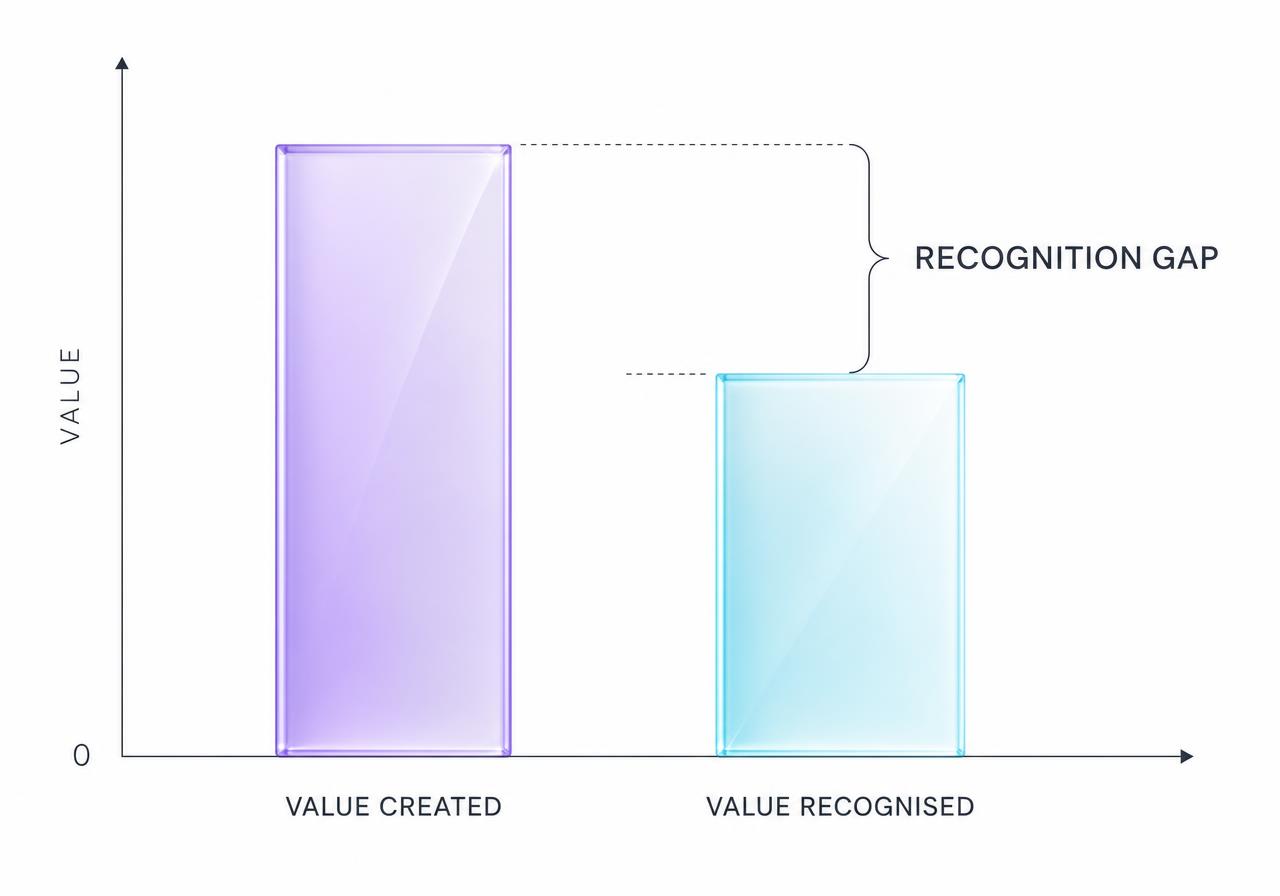
Recognition is not marketing. It is the clarity that makes value matter.
The Three Dimensions of Value Recognition
Every commercial decision is influenced by three interconnected dimensions of value.
Product value recognition, leader value recognition and customer value recognition shape how buyers interpret, trust and prefer one option over another.
When all three are aligned, value becomes visible, credible and relevant. When one is missing, the whole picture weakens.
Product Value Recognition
Customers first evaluate the value of the solution itself.
Does it solve a meaningful problem? Does it improve outcomes? Can they clearly recognise its commercial impact?
Features and functionality matter, but they are rarely enough on their own.
People recognise value when they understand how a solution improves their business, reduces risk, creates opportunities or helps them achieve something that matters.
People recognise product value when they see how it improves their own outcomes.
Leader Value Recognition
Businesses are built by people. In business-to-business relationships especially, customers also evaluate the judgement, credibility and authenticity of those leading the organisation.
Leadership influences confidence. Customers naturally ask themselves: Do these people understand my business? Can I rely on their expertise? Will they still be here when challenges arise?
When leadership is recognised for its authenticity, consistency and expertise, trust grows naturally.
Recognised leadership turns expertise into confidence.
Customer Value Recognition
Perhaps the least understood dimension is the customer themselves.
Customers do not evaluate value objectively. They interpret every solution through their own circumstances, priorities, ambitions, pressures and perception of risk.
The same product can appear transformational to one organisation and irrelevant to another—not because the product has changed, but because the customer's perspective has.
Understanding how customers recognise value is therefore just as important as understanding the value a business creates.
Customer value recognition is the perspective through which all other value is judged.
Recognition Creates Trust
Recognition is the beginning of every commercial relationship.
Trust develops when recognised value is consistently reinforced through experience.
Products perform as promised. Leadership communicates with integrity. Customer experience aligns with expectations.
Consistency transforms recognition into confidence. Confidence becomes trust.
Trust cannot be demanded. It is accumulated through repeated evidence that the recognised value is genuine.
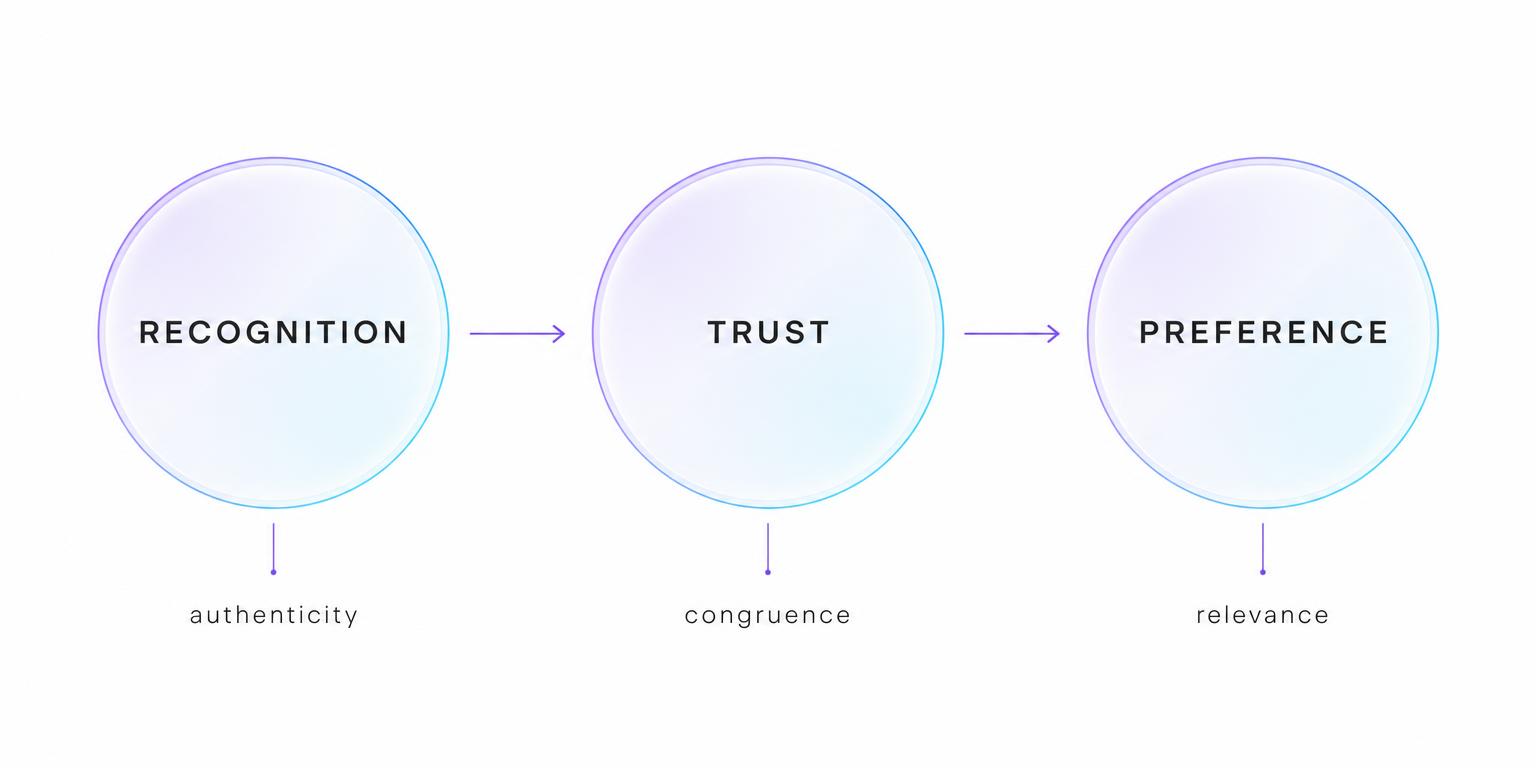
Trust is the accumulation of evidence that recognised value is real.
Trust Creates Preference
Markets are rarely short of alternatives. Customers usually have multiple options available.
Preference emerges when customers recognise one organisation as being more relevant to their own goals than the others.
Price is only one consideration. Customers also evaluate confidence, relevance, understanding, expertise and the likelihood of achieving successful outcomes.
Preference is therefore not simply about having the best product. It is about becoming the solution customers believe is most appropriate for them.
Preference is earned when customers believe you are the most relevant choice.
Sustainable Business Growth
Many businesses ask: 'How can we create more value?' It is an important question.
But another question often creates greater commercial impact: 'Where is value failing to be recognised?'
The answer may not lie in the product. It may lie in how leadership communicates. It may lie in how customers interpret value. It may lie in the alignment between all three.
Recognised value creates understanding. Trusted value creates confidence. Preferred value creates sustainable growth.
Businesses do not grow simply by creating value. They grow when the value they create is recognised, trusted and ultimately preferred by the people they exist to serve.
When value is recognised, it creates understanding.
When it is trusted, it creates confidence.
When it is preferred, it creates sustainable business growth.